
Choose your service area
Colorado, Idaho, or another state.
TEST — DO NOT PUBLISH · Protected Solar Builder QA mode. Contact gate is satisfied with artificial test data and final lead submission is suppressed.
Solar System Builder
Start with what you want to power. The interactive planner recommends a direction, lets you build the system scene by scene, and explains what the result can realistically do.




Colorado, Idaho, or another state.
Start with appliances and daily life.
Change components and see the effect.
Elevation reviews final fit, protection, and pricing.
See the system before you configure it
Use these visual references as you move through the Builder. They show the major power path, the system directions, and the installation architecture without pretending every RV uses the exact same hardware.
SolarCreates DC powerBatteryStores energyInverterSupplies AC powerYour LoadsUse the energy StandardWeekend RV / essential power
 GoldExtended travel / full-time RV
 PlatinumHigher-demand / heavy off-grid
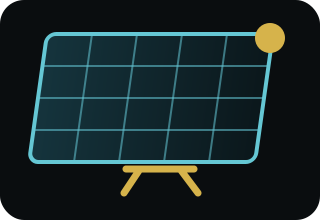 Roof array↓
 Charge control↓
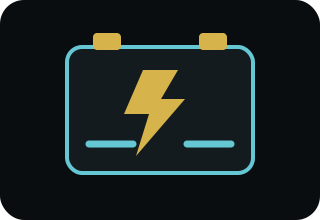 Battery bank
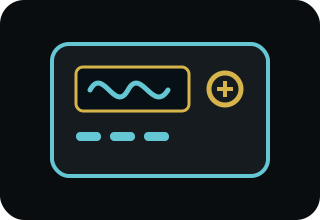 Inverter / power center
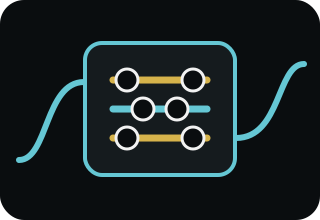 Protection & distribution
Visual planning reference only. Final component selection, roof fit, cable sizing, overcurrent protection, mounting, and compatibility are verified during professional review.
Your Interactive Power Plan
Start with everyday power use, get a clear recommendation, and customize only what matters. Your location and progress stay attached to this solar build.
Solar400WBattery200AhInverter2,000WYour useChoose loadsStart with everyday life—not solar equipment. Choose a typical use or build your own list, and the planner will translate it into energy, battery, solar, and inverter needs.
The estimates use typical daily energy—not just the wattage printed on the device.
Live Power Recommendation
The planner will compare your everyday power need with the system currently selected.
Estimated needSelected system capability
Use the recommendation above or choose a package yourself. Every selection can still be adjusted.
Select a panel family and quantity. Final roof layout must be measured.
Select lithium capacity, cold-weather features, and battery quantity.
Choose the AC power level and how the array charges the battery bank.
Power Snapshot
A practical planning view of production, storage, inverter capacity and the loads you selected.
Estimated solar / day—Planning estimateUsable battery reserve—Planning reserveInverter capability—Continuous classSelected-load estimateSelect loadsRepresentative daily use Daily energy balanceSelect loadsCompare solar production with selected loads
 System use level—Based on the current build
Approximate battery-only runtime for one representative load at a time. Solar input can extend runtime; simultaneous loads reduce it.
Planning estimates use about 4.5 peak-sun-hours, normal conversion losses and a battery reserve. Actual production and runtime vary with sun hours, weather, shade, season, temperature, battery state, appliance efficiency, startup demand and simultaneous loads. Final design and performance require professional review.
Build the rest of the system around the array and battery bank.
Required cable sizing, fusing, breakers, disconnects, busbars, terminals, equipment mounting, and labeling cannot be removed from the final design.
Tell us what needs to happen before or alongside the new system.
Ready for the next step?
Your current build is summarized here so you do not need to scroll back to find the review action.
SOLAR BUILDER SETUP
Two quick steps save your build and connect it to the right Elevation market.
Complete Build Review
Your saved contact stays attached to this active build journey. You may update it below, but you do not need to re-enter the same contact information.
Solar Build Review
Reference:
Your Solar build is submitted when we confirm your request was received. Text, email, and call are optional follow-up actions.